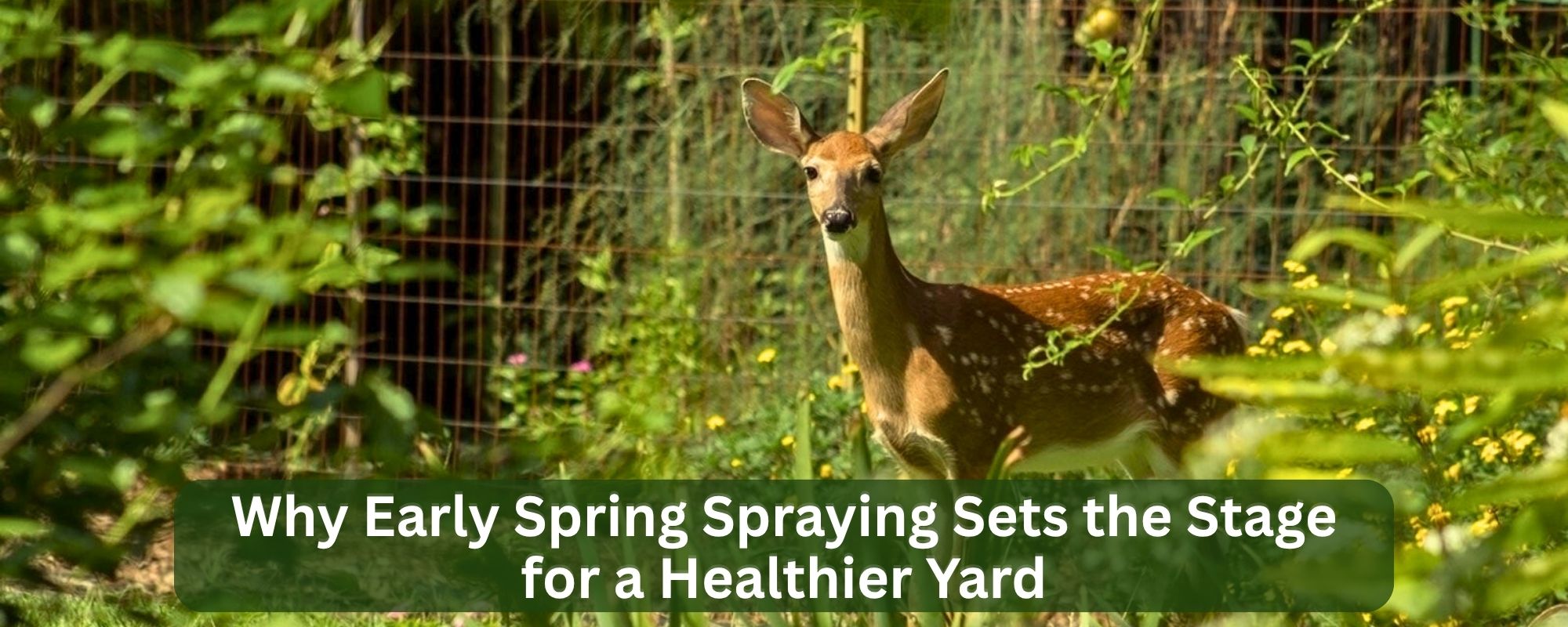
Deer Control in Suburban Gardens: How to Protect Your Landscape From Costly Deer Damage

Deer Control in Suburban Gardens: How to Protect Your Landscape From Costly Deer Damage
For many homeowners across the Northeast, deer have become one of the biggest threats to healthy landscapes and well-maintained gardens. As suburban neighborhoods continue expanding into wooded areas, deer activity in residential communities has increased dramatically, leaving homeowners frustrated by damaged plants, eaten flowers, and expensive landscape loss.
If you’ve noticed missing blooms, shredded leaves, or overnight plant damage, you’re not alone. Deer browsing in suburban gardens has become increasingly common throughout New York, New Jersey, Connecticut, Pennsylvania, and surrounding suburban communities.
Why Deer Are a Major Problem in Suburban Gardens
Suburban neighborhoods create ideal environments for deer populations. Many residential communities offer:
- Easy access to ornamental plants
- Consistent food sources
- Fewer natural predators
- Landscaped properties with tender plant growth
- Wooded edges and protected areas for bedding
As deer populations continue growing, suburban gardens often become reliable feeding locations throughout spring, summer, and fall.
Unfortunately, deer do not simply “sample” plants. Repeated browsing can weaken or permanently damage shrubs, flowers, trees, and expensive landscape installations.
Common Signs of Deer Damage in Residential Landscapes
Homeowners often mistake deer damage for insects, rabbits, or plant disease. However, several signs commonly point to deer browsing activity.
Common indicators include:
- Torn or jagged plant leaves
- Missing flower buds and blooms
- Browsed shrubs and hedges
- Damaged hostas and hydrangeas
- Repeated feeding on new plant growth
- Plants stripped overnight
- Deer tracks near garden beds
- Damage occurring at similar plant heights
Deer are especially attracted to soft, nutrient-rich growth commonly found in suburban ornamental gardens.
Plants Deer Commonly Target in Suburban Gardens
Many popular landscape plants are highly attractive to deer. Some of the most commonly damaged plants include:
- Hostas
- Hydrangeas
- Roses
- Tulips
- Daylilies
- Arborvitae
- Azaleas
- Rhododendrons
- Impatiens
- Young tree growth
During periods of drought or increased population pressure, deer may also begin feeding on plants they normally avoid.
Why DIY Deer Control Often Fails
Many homeowners try homemade deer repellents or store-bought deer sprays after damage has already started. While some products may provide short-term results, inconsistent application and changing deer feeding behavior often limit effectiveness.
Common DIY deer deterrent methods include:
- Motion lights
- Noise makers
- Homemade sprays
- Soap bars
- Human hair
- Deer-resistant plant lists
The challenge is that suburban deer quickly adapt to many temporary deterrents, especially when food sources remain available nearby.
Professional deer control programs are typically far more effective because they rely on:
- Consistent application schedules
- Seasonal deer behavior monitoring
- Commercial-grade deer repellents
- Coverage tailored to specific landscapes
Why Mid-Season Deer Control Matters
One of the biggest misconceptions about deer control is that protection is only important during spring planting season.
In reality, mid-summer and late-season browsing pressure can become even more severe.
During summer:
- Fawns begin actively feeding
- Deer movement increases
- Landscapes produce attractive new growth
- Dry conditions limit natural food sources
- Feeding pressure intensifies heading into fall
Without continued protection, deer often return repeatedly to the same residential properties.
Maintaining a proactive deer repellent program throughout the growing season helps reduce long-term browsing patterns and protects vulnerable landscape investments.
Best Deer Control Solutions for Suburban Gardens
The most effective deer control strategies combine prevention, consistency, and professional treatment timing.
Effective suburban deer management may include:
- Professional deer repellent applications
- Routine seasonal treatments
- Landscape-specific coverage plans
- Protection for flowers, shrubs, and ornamentals
- Monitoring high-pressure feeding periods
- Ongoing maintenance throughout peak deer season
At The Deer Guys, our programs are designed specifically for suburban properties where deer pressure remains high throughout the year.
Our professional deer repellent treatments help homeowners:
✔ Protect valuable landscaping
✔ Reduce browsing damage
✔ Preserve flowers and ornamental plants
✔ Maintain healthier gardens
✔ Prevent repeated deer feeding patterns
Deer Control Is About Long-Term Landscape Protection
For many homeowners, landscaping is one of the largest investments on their property. Without proper deer protection, repeated browsing damage can quickly impact both curb appeal and plant health.
The earlier deer activity is addressed, the easier it is to prevent long-term damage.
Consistent deer control treatments help suburban homeowners maintain healthier gardens, stronger plant growth, and more enjoyable outdoor spaces throughout the growing season.
Protect Your Garden Before Damage Gets Worse
If you’re seeing signs of deer damage around your property, waiting often allows browsing pressure to increase.
Professional deer control helps protect your landscape before costly damage becomes more severe.
Contact The Deer Guys today to learn more about our suburban deer control programs and how we help homeowners protect their gardens, flowers, shrubs, and landscapes throughout the season.